The secure installation of piping systems on commercial rooftops is paramount for ensuring structural integrity and operational efficiency. Unsecured pipes pose significant risks, including potential damage to the roofing membrane, system failures, and safety hazards. This article outlines best practices for effectively securing pipes on commercial rooftops.
Understanding Rooftop Pipe Supports
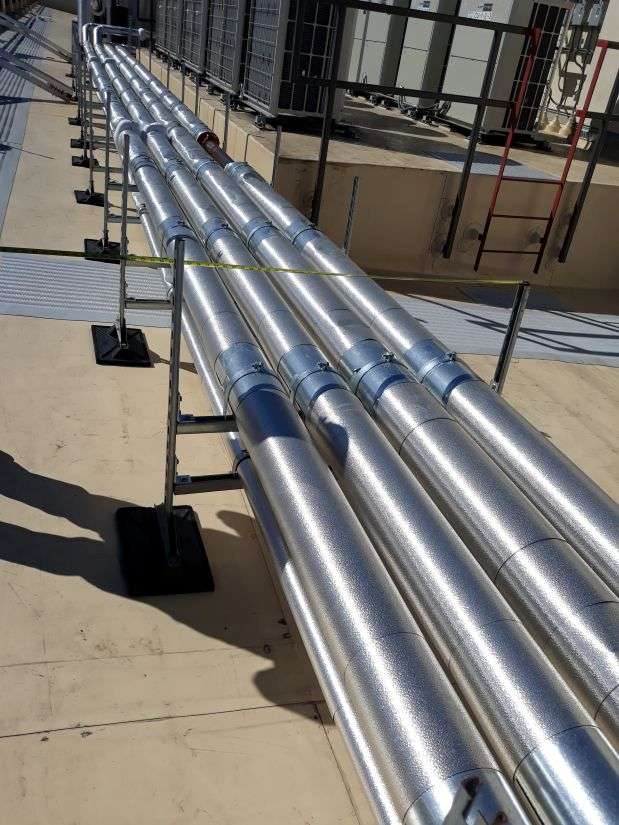
Rooftop pipe supports are critical components designed to provide stability and load distribution for piping systems. They come in various configurations — including adjustable and fixed supports — tailored to accommodate diverse pipe diameters and weights. Selecting the appropriate support system is essential for optimizing performance and longevity.
Assessing Rooftop Conditions
Before installation, a comprehensive assessment of rooftop conditions is necessary. Key factors to evaluate include:
- Roof Type: The structural characteristics of the roof (e.g., flat, sloped) influence support selection.
- Environmental Conditions: Local weather patterns — including wind loads and precipitation — must be considered when determining support requirements.
- Load Distribution: Analyzing how load is distributed across the rooftop helps in selecting the most appropriate support system.
Choosing the Right Pipe Support System
The selection of an optimal pipe support system involves several important considerations:
- Load Capacity: Ensure the support system is engineered to handle the combined weight of the pipes and any ancillary equipment.
- Material Selection: Choose corrosion-resistant materials, such as galvanized steel or stainless steel, to maximize durability in harsh environments.
- Support Configuration: Evaluate various support types — including brackets, hangers, and clamps — to meet the specific needs of each application.
Installation Best Practices
Following best practices during installation is essential for ensuring the effectiveness of pipe supports. Key steps include:
- Compliance with Manufacturer Specifications: Strictly follow the manufacturer’s installation guidelines to ensure optimal performance.
- Stability and Alignment Verification: Confirm that supports are level and securely anchored to prevent displacement under operational conditions.
- Appropriate Fastening Techniques: Use fasteners that are compatible with both the support system and the roofing substrate to maintain structural integrity.
Regular Maintenance and Inspections
A routine maintenance schedule is essential for prolonging the lifespan of pipe supports. Regular inspections should focus on:
- Wear and Tear Assessment: Identify any signs of degradation or fatigue in the support system.
- Fastener Integrity: Check for loose or corroded fasteners that may compromise support stability.
- Environmental Impact: Monitor for any environmental factors that may affect the support system, such as debris accumulation or water pooling.
Safety Considerations
Safety protocols must be strictly followed during both installation and maintenance. Key measures include:
- Personal Protective Equipment (PPE): Ensure all personnel are equipped with appropriate PPE, including helmets, gloves, and harnesses.
- Adherence to Safety Standards: Follow industry safety regulations and established best practices to reduce the risks associated with rooftop work.
The secure installation of pipes on commercial rooftops is essential for maintaining operational efficiency and safety. By following established best practices, stakeholders can protect their investments and ensure the long-term functionality of their piping systems.
Finding the perfect rooftop support solution doesn’t have to be complicated. Let MIRO take care of the hard work for you. Request a quote or schedule a free rooftop design consultation to discover the best rooftop support system for your needs.